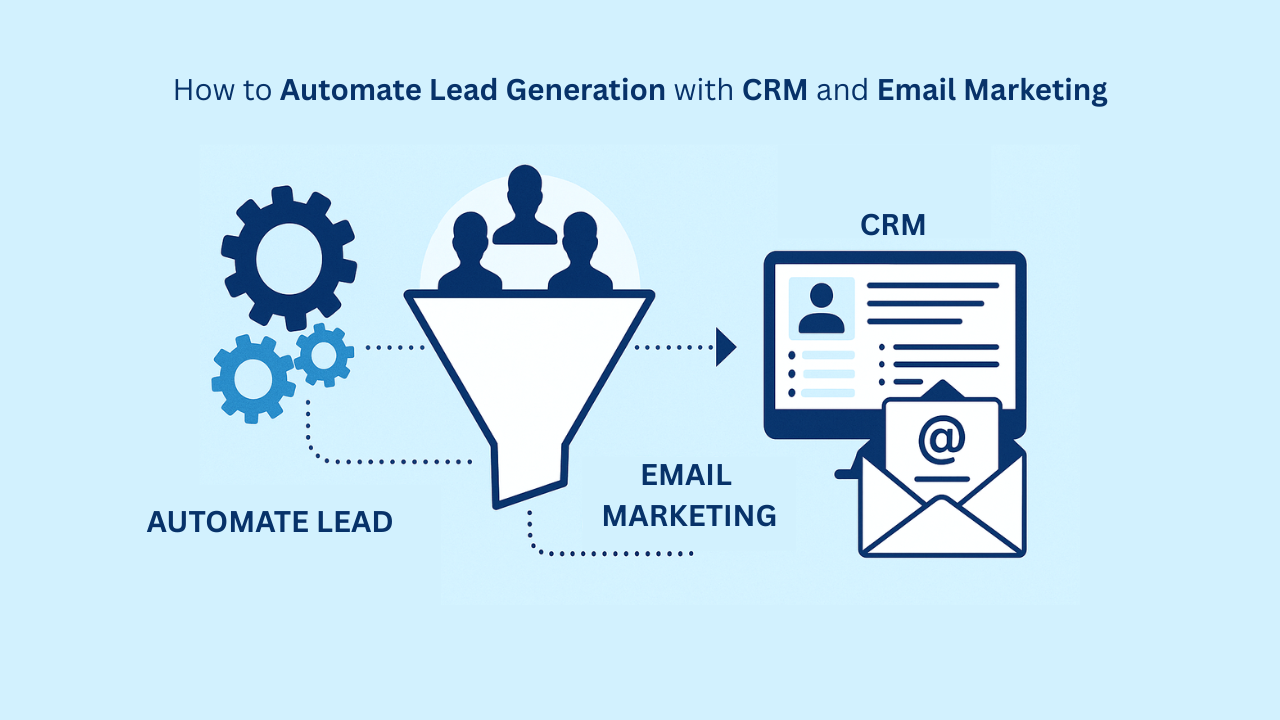
Lead generation can no longer rely solely on manual outreach and one-off campaigns. To scale reliably, you need a system that captures, qualifies, nurtures, and hands off leads, all with minimal manual intervention. The smart way to do this is by combining CRM with email marketing automation. In this article, we’ll walk through a step-to-end automation framework, share best practices, and explain how Prospect Accel fits into this picture.
Here's a simplified lifecycle of how CRM + email marketing automation can drive leads:
Use web forms, gated content, chatbots, landing pages, or social media lead ads to gather prospect data (name, email, company, etc.). Each captured lead is automatically logged into your CRM.
Once inside the CRM, additional data (company size, industry, engagement behavior) is appended or enriched. Leads are segmented based on characteristics and behavior.
Assign scores based on actions (email opens, link clicks, page visits) and firmographic traits. When a lead's score crosses a threshold, it becomes “sales qualified.” This ensures your team follows up only the most promising prospects.
Based on segment or score thresholds, trigger email sequences designed to educate, build trust, and compel action. These workflows may include follow-ups, re-engagements, or cross-sell messages.
If a lead visits a pricing page, downloads a whitepaper, or clicks a demo button, trigger specific follow-ups immediately. This dynamic interaction increases conversion chances.
Once a lead is marked qualified, the CRM can assign tasks automatically to sales reps, schedule follow-ups, and keep track of all communications in one unified view.
Track open rates, click-throughs, conversion rates, funnel drop-offs, and lead velocity. Use these metrics to iterate on email content, scoring weights, segmentation rules, and workflow logic.
Automation is powerful but misused, it can backfire. Here are key practices to get it right:
Understand each stage your prospect passes through, and group leads based on industry, behaviour, pain points, or lifecycle stage.
It's not just about what a lead does, but also what they don't do. Deduct points when a lead becomes inactive or unsubscribes.
Merge fields, dynamic content, and behavior-based triggers help you tailor emails. Generic, mass blasts degrade deliverability and brand trust.
Avoid sending too fast. Space out follow-ups, control the cadence, and include “wait” or decision-point checks inside your workflows.
Old or duplicate contacts erode trust and waste resources. CRMs with duplicate detection and data hygiene features are essential.
Use A/B tests, compare subject lines, experiment with timing, and refine the flows that underperform.
Even in automated workflows, you should offer opportunities for live interaction, calls, webinars, and one-on-one consultations. Don't fully remove human connections.
Scalability & Consistency: You can reach hundreds or thousands without adding headcount.
Efficiency: Saves manual follow-ups, reduces dropped leads, and lets your team focus on high-value tasks.
Better Lead Quality: Through scoring and segmentation, only the most engaged prospects reach your sales team.
Faster Response Times: Real-time triggers let you respond immediately when prospects take meaningful actions.
Data-Driven Decisions: Analytics tell you which campaigns work, where prospects drop, and how to optimize.
When you adopt CRM and email marketing automation, the tool you choose matters. Here's why Prospect Accel is a compelling option:
Prospect Accel is designed as an integrated CRM + email marketing platform where email campaigns are native, and logs are instantly synced.
Automated email logs directly into CRM — no separate systems or manual tracking.
Customizable templates and drag-and-drop editor for easy email creation.
Centralized database accessible from CRM — manage contacts without switching tools.
Inbuilt analytics and detailed reports to optimize campaigns.
Bulk upload features for importing large datasets without manual entry.
Data integrity, duplicate checks, visual pipeline views, and cloud infrastructure to offer robust usability.
With all these features tightly integrated, Prospect Accel becomes your single source for capturing, nurturing, and converting leads, no patchwork of tools needed.
Define your ideal customer profile (ICP), lead scoring rules, and segmentation criteria.
Set up your capture touchpoints, forms, landing pages, chatbots, and connect them to the CRM.
Import existing leads (via bulk upload) and de-duplicate.
Design your email workflows: welcome, nurture, re-engagement, triggering logic.
Define automation handoff rules to sales.
Launch a pilot with a small segment; measure metrics (open, clicks, conversions, lead-to-opportunity).
Review performance, refine logic, and scale to more segments.
Automating lead generation by coupling a purpose-built CRM with email marketing workflows isn’t optional anymore, it’s essential to scale reliably. The right setup ensures that no lead slips through, every nurturing step is personalized, and high-potential prospects are delivered to sales at the perfect moment. With Prospect Accel, all this lives under one hood, reducing friction and ensuring alignment between marketing and sales.