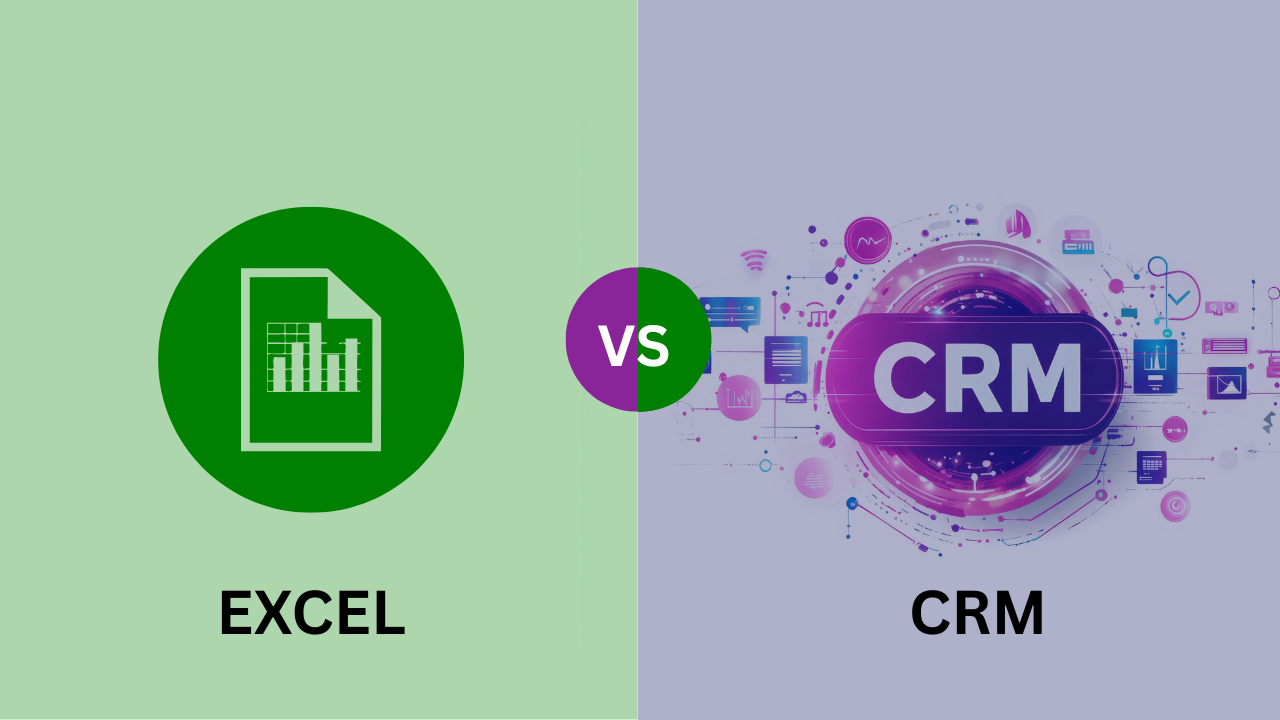
As businesses grow, managing customer data becomes more complex and crucial. Many startups begin with spreadsheets to track leads, contacts, and sales activities. However, as operations scale, a more robust system like a CRM becomes necessary. In this blog, we'll explore the key differences between spreadsheets and CRM software, and help you decide when it's time to switch to a solution like Prospect Accel CRM.
A spreadsheet is a digital document used to store, manage, and manipulate data in a tabular format. Businesses commonly use spreadsheets for tracking customer information, sales data, inventory, and project timelines. Tools like Microsoft Excel and Google Sheets are versatile, affordable, and familiar.
However, spreadsheets come with limitations as your data and team grow. Manual entry, version control issues, and lack of integration with other tools can slow down productivity and decision-making.
CRM stands for Customer Relationship Management. CRM systems are platforms designed to manage a company's interactions with current and potential customers. A Sales CRM like Prospect Accel CRM helps you streamline sales processes, track leads, manage pipelines, and automate communication.
In short, if you're wondering "What does CRM stand for?" or "What is CRM?": it's the backbone of a customer-centric business strategy, designed to improve relationships and drive sales.
| Feature/Functionality | Spreadsheet | CRM Software (e.g., Prospect Accel CRM) |
|---|---|---|
| Data Entry | Manual, prone to errors | Automated, guided, and structured |
| Collaboration | Risk of overwriting data | Real-time multi-user access |
| Data Management | Basic filtering and sorting | Advanced segmentation and analytics |
| Task & Activity Tracking | Manual updates | Automated reminders and task assignment |
| Integration with Other Tools | Limited or no native integration | Seamless integration with email, calendars, etc. |
| Scalability | Difficult as data grows | Designed for growth |
With Prospect Accel CRM, you gain the advantage of purpose-built CRM tools that go beyond data storage to actively drive sales and customer engagement.
Here are some signs that your business has out-grown spreadsheets and is ready for a dedicated CRM system:
Your team struggles with duplicate or outdated customer records.
Sales leads are falling through the cracks.
You lack visibility in your sales pipeline.
You need to collaborate with team members in real time.
You're missing out on follow-ups due to manual processes.
A robust Sales CRM like Prospect Accel CRM addresses all these challenges by offering centralized data, automated workflows, and smart analytics.
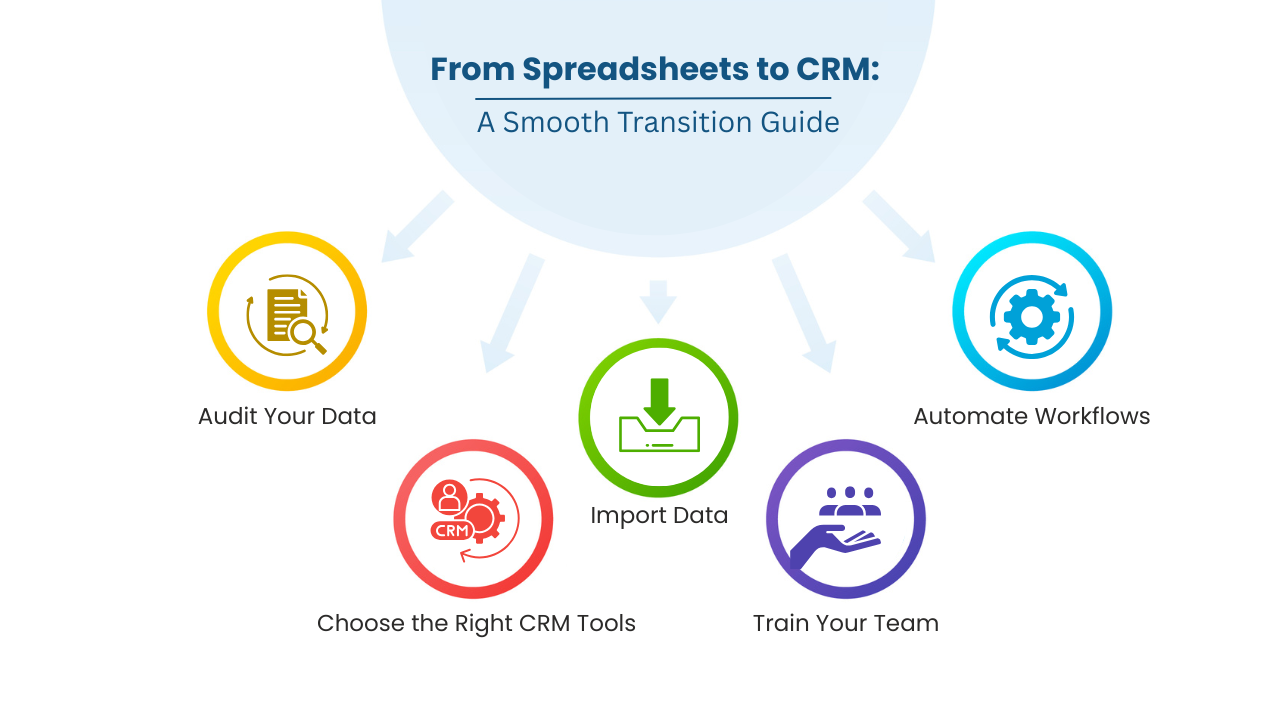
Switching from spreadsheets to CRM software may seem daunting, but it doesn't have to be. Here's how to make the process smooth:
Audit Your Data: Clean and organize your spreadsheet data before migrating.
Choose the Right CRM Tools: Look for a system that matches your business size and sales goals. Prospect Accel CRM is scalable and user-friendly.
Import Data: Use the CRM's import tools to bring in your contacts, leads, and opportunities.
Train Your Team: Provide hands-on training to maximize adoption.
Automate Workflows: Take advantage of automation to reduce manual work.
With Prospect Accel CRM, the transition is seamless and supported with expert onboarding and support.
If you're a solo entrepreneur or a small team just starting out, spreadsheets might suffice. But as your business scales, they become a bottleneck. CRM software like Prospect Accel CRM empowers your sales team with real-time collaboration, deep insights, and automation capabilities that spreadsheets simply can't match.
Your next step? Evaluate your current processes and see where inefficiencies lie. Investing in modern Sales CRM is not just about upgrading tools, it's about accelerating growth.
So, whether you are asking, "what is CRM" or trying to understand "what does CRM stand for," know this: it's more than a tool—it's your growth partner.
Upgrade your customer relationships. Upgrade to Prospect Accel CRM today.